

Writing for me is certainly an art form, and art is something which is subjective, so you may see things I didn’t, I hope you do …

Western Culture: Living on a Mental Health Cliff Edge?
It’s a stark paradox: in our Western culture, mental health struggles are escalating rapidly, despite increasing collective wealth, advanced medical treatments, and comparatively readily available therapies and medications. This isn’t a criticism of these resources, many of which are invaluable. However, it suggests the problem’s roots extend beyond individual challenges, pointing toward a cultural culpability.
Interestingly we react decisively to road fatalities with collective action – seatbelt laws, speed limits, and anti-drink driving campaigns. These are societal-level responses, shifting cultural norms. Yet, when it comes to mental health, where suicide rates in countries like Australia far exceed road deaths (Lifeline Data and Statistics), we lack a similar unified response for cultural change
The common excuse? That’s just how things are, people are people. Gabor Maté, in “The Myth of Normal,” challenges this, noting that materialistic cultures often promote selfishness and dominance, devaluing connection. He quotes Darcia Narvaez, who suggests we’ve become “species-atypical, a sobering idea when you think about it: no other species has ever had the ability to be untrue to itself, to forsake its own needs, never mind to convince itself that such is the way things ought to be.” (Gabor Maté, The Myth of Normal, p.122)
Take a moment: we might be the only species convinced our unnatural state is normal.
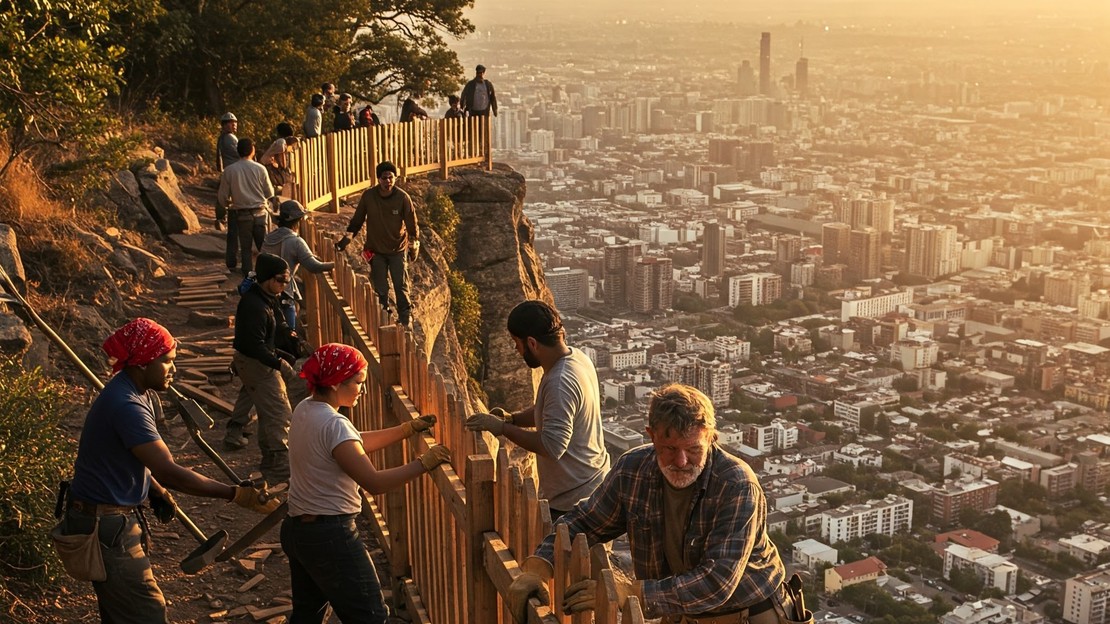
Mental health and AOD services function like ‘ambulances at the bottom of the cliff’ – essential for crises, but not a substitute for preventative measures, building ‘fences’ at the top. These fences represent a crucial cultural choice: actively prioritizing and nurturing deep human connection over the chase for material wealth, outward displays of status, and actions driven by a need to fit into a widely accepted, though damaging, ‘normal.’
Initiating building these fences doesn’t sit with mental health services or the government. Whilst they have a role to take up, it sits with each of us. Starting locally – in our families (birth or choice), neighbourhoods, businesses, sports clubs – anywhere people gather. It happens when we stand together and believe things can be, and decide they have to be different. Creating spaces where kindness thrives, relationships are treasured above transactions, and genuine connection is seen as the ultimate marker of a rich life.